

23 Things Highly Sensitive Is Not
Whilst I am thankful that the mainstream media is writing about what highly sensitive is, I am frustrated when the chosen imagery and headlines do little to eradicate the misunderstanding that exists about what highly sensitive actually is. So let’s clear it up.
Highly Sensitive in the Media
As an example, the image used in this article only serves to reinforce the notion that some have that high sensitivity is about crying a lot.
The title of this article implies that there is something wrong with highly sensitive people.
So What is ‘Highly Sensitive’?
So let’s cut to the chase. This is what highly sensitive is NOT.
1. Not a Disorder
We are not talking about a disorder. It’s a set of personality traits.
2. Not Made Up
This is NOT a made up thing. There is scientific backing. It’s real.
3. No One Size Fits All Model
Each highly sensitive person, just like every other person on this planet, is unique.
And so high sensitivity does NOT look the same in every person.
Some people are sensitive to noise, others to taste, others to activity around them. Some are introverts and some are extroverts.
4. It’s Not All About Crying
We do NOT spend our entire day crying uncontrollably because we see a kitten, someone stands on our foot or we see a news report.
Whilst we experience emotions intensely and process things deeply, we do actually spend a lot of our day completely tear free.
Our tissue expenditure is not as excessive as the mainstream media would have you believe.
5. No Tree Hugging Involved
There’s no link between high sensitivity and tree hugging.
A school director once suggested the two things may just be connected. Yes, he is still breathing. No, we are no longer attending the same school.
6. We’re Not Ghostbusters
Highly sensitive people do NOT see dead people. There is a tendency to be spiritual because of the tendency to deeply process and think. But don’t expect to engage your highly sensitive friend in any ghost busting activity any day soon. It’s not a standard associated trait.
7. Not a Parental Excuse
This is NOT something parents make up as an excuse to molly coddle their children. These children genuinely struggle with processing the excessive sensory input that our world constantly throws at them.
8. Highly Sensitive Does Not Apply to Every Child
This is NOT something that every parent thinks their child is. As one mother suggested: “All kids are highly sensitive. Is HS actually a diagnosis? Every mother thinks her child is more sensitive than other children.”
The fact is that between 15 and 20% of children are highly sensitive. 80 to 85% is not.
9. Not Autism
This is NOT the same thing as autism.
10. Not an Excuse to Avoid Discipline
Claiming a child is highly sensitive is NOT an excuse to not discipline a child. The reality is that highly sensitive children need a gentle approach to discipline.
11. Not Sensory Processing Disorder
Being highly sensitive is actually NOT the same as sensory processing disorder. You can read here about the differences.
12. No Royalty Involved
Highly sensitive people and children are NOT drama queens or kings. They are easily overwhelmed. They have an issue processing excessive stimuli in their environment.
13. No Fix Needed
Highly sensitive children are NOT broken. They do NOT need fixing. It’s that simple. What these children need is you to understand their instruction manual.
14. Not A No Show Excuse
High sensitivity is NOT an excuse used to get out of attending your birthday party. Highly sensitives find busy places with lots of people overwhelming. Children in particular struggle with birthday parties. Even their own.
15. Highly Sensitive is Not the Same as ADHD
Unfortunately, it’s also common to misdiagnose a highly sensitive person with ADHD. However, it is clear that the two things are not the same.
16. Not to Do With Overprotecting
Highly sensitive is NOT caused by being an overprotective parent. It is not caused by anything. It is an inborn set of traits. Often hereditary.
17. Highly Sensitives Are Not Looking for Attention
Highly sensitive children are NOT attention seekers.
What is true is that they easily feel uncomfortable in an environment. Many factors make a highly sensitive feel either physically or emotionally uncomfortable. For children this feeling is difficult to express and so they may come across as fussy.
Or like they are seeking attention.
In reality, they are distressed.
18. Not Special Needs
Highly sensitive children are NOT special needs children. They have an instruction manual and are sensitive to specific stimuli.
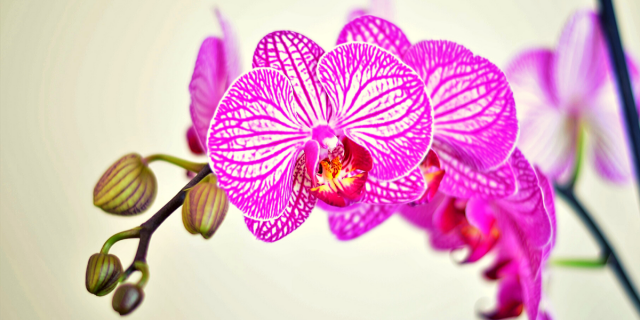
Thinking of them as orchid children is useful. The right environment, the right care and these children can thrive.
19. Do Not Need Special Education
Such children do NOT automatically need special education. They benefit greatly from support in the classroom to reduce the stimuli they have to deal with. This is because stimuli negatively impacts their concentration.
Therefore, they benefit greatly from scheduled time out in school.
However, being highly sensitive is not a prerequisite for special schooling.
20. Not About Thin Skin
We do NOT need to grow a thicker skin. But thank you for trying to help.
21. Not Negative
There are many positive aspects of high sensitivity. This is certainly NOT a negative thing.
22. High Sensitivity is Not a Medical Issue
High sensitivity is NOT something you need to run to the doctor or a professional with.
23. No Need for Highly Sensitive Children to Toughen Up
These children, particularly boys, do NOT need to toughen up.
All children should be able to be who they are. Children should be allowed to live authentically. Children should not have to meet society’s messed up expectations of them. Let children be children.


Amanda, I’ve been enjoying so many of your blog posts recently and been desperately meaning to get round to coming over and thanking you!
I know what you mean, it’s nice to see sensitivity getting wider press (like introversion did a few years ago with ‘Quiet’) but one does tend to wince when it gets the heavy-handed treatment.
As a parent it becomes rather wearing having people accuse you of causing the ‘problem’ by pandering to your children, doesn’t it?
I feel so much better about myself now that I understand this is just the way I’m wired. I’ve stopped apologising (well to be honest the habit is a work in progress. I catch myself before I apologise out loud and then have this internal debate with myself about why I shouldn’t have even felt the NEED to have to apologise. Etc!). And I like to think I’m bringing up my kids to have so much more appreciation of their uniquely authentic natures than I ever did.
Thank you for the eloquent way you celebrate neurodiversity!
Thank you for your kind encouraging words Lucinda. It is hard to stop the mindset of feeling like you have to apologise because you have to work outside the expected norms…. but it is getting easier as I understand more about myself and my children and our highly sensitive natures. It also helps to hear from other parents who get it – and that support makes such a difference!